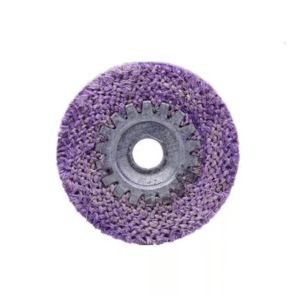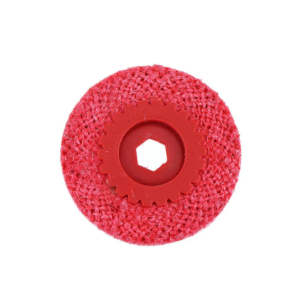
Pure Hemp / Sisal Wheels
Firm natural-fiber construction for early polishing stages and stronger cutting action.
- Custom diameter and thickness
- Layer and stitching options
- Bore and center construction
Source hemp and sisal buffing wheels by diameter, thickness, layers, stitching, bore, treatment and packaging for strong cutting, compound buffing and industrial metal finishing.
Hemp wheels are normally selected for cutting and intermediate buffing. Choose the construction, stitching and compound together to balance cut, heat, flexibility and finish.
Firm natural-fiber construction for early polishing stages and stronger cutting action.
Blended constructions can balance cutting action, flexibility and compound retention.
Color-coded product programs help distributors and operators identify different constructions.
Specify size, bore, layers and stitch pattern for manual, semi-automatic or production buffing.

Hemp and sisal fibers create a firmer, more aggressive buffing face than final-color cloth wheels. They are commonly paired with a cutting compound to prepare metal before finer polishing stages.
Use this buyer checklist to compare quotations and avoid changes in firmness or polishing behavior between orders.
| Decision | Available discussion | Why it matters | What to send |
|---|---|---|---|
| Fiber construction | Hemp, sisal, treated fiber or hemp-cotton blend | Affects cut, flexibility, heat and compound behavior | Current wheel photo or desired result |
| Dimensions | Custom diameter, thickness, bore and center build | Controls machine fit and working face | Exact metric or inch size |
| Layers & stitching | Layer count, stitch rows, pattern and density | Changes wheel firmness and pressure response | Drawing, sample or stitch reference |
| Treatment & color | Color-coded or treated construction by program | Supports performance tuning and SKU identification | Required color and approval criteria |
| Application | Stainless steel, aluminum, brass and other metal finishing | Material and finish determine wheel-compound pairing | Metal, compound, speed and target finish |
| Packaging | Bulk carton, label, bag, box, barcode or private label | Fits importer, distributor and retail channels | Pack count and artwork requirement |
Use a firm natural-fiber face with an appropriate cutting compound for early-stage correction.
Discuss pressure, edge geometry and stitch firmness for controlled work on fabricated parts.
Prepare stainless steel, aluminum or brass before moving to a finer coloring wheel or felt stage.
Lock wheel dimensions, layers, stitching, bore and compound reference for repeat processing.
Share metal, starting surface, compound and target finish.
Select fiber, diameter, layers, stitching and bore.
Compare cut, heat, firmness, finish and useful life.
Confirm label, barcode, pack count and carton marks.
Lock the approved wheel construction under a repeat SKU.
The terms are often used together in the market for natural-fiber cutting wheels. Exact fiber, weave, treatment and construction can differ, so buyers should approve a clear specification or sample.
Yes. Send the dimensions, layer count, stitch pattern, bore, workpiece, compound, machine and target finish for review.
Usually it is used for rough or intermediate cutting with compound. A finer cloth or felt wheel is commonly used afterward for the final coloring or mirror-finishing stage.
Samples can be discussed so buyers can test cut rate, firmness, heat, finish and wheel life on their actual process.
Bulk export cartons, product labels, barcodes, retail bags, boxes and private-label programs can be discussed according to product and quantity.
MOQ and lead time depend on wheel construction, dimensions, treatment, custom packaging and order quantity. Send a complete RFQ for confirmation.
Cornovo will help organize the right questions for sampling, wholesale supply and private-label packaging.
PRODUCT DETAILS · WHOLESALE & OEM INQUIRIES
Specify a custom wholesale buffing-wheel program by fibre construction, layer build, stitching and dimensions. Written variant control helps purchasing teams distinguish visually similar wheels and manage repeat industrial supply.
Group order lines by the actual buffing operation and machine fit. For multi-stage polishing, document the wheel and compound used at each stage. Request confirmation of any material blend or treatment rather than inferring it from a photograph.
| Specification | What to Confirm |
|---|---|
| Build specification | Actual fibre composition, treatment, layers and stitch pattern. |
| Dimensional specification | Diameter, thickness, bore and center reinforcement. |
| Process reference | Workpiece, compound and required stage of polishing. |
| Reorder identification | Approved supplier code, sample and packing label for every variant. |
| Commercial terms | Sample quantity, bulk quantity, MOQ, lead time, destination and delivery basis: confirm in the written quotation. |
Check the build against the approved reference and test the proposed wheel in its intended process stage. Keep changes in stitching or material separate from routine reorders.
For powered products, request the operating rating and mounting instructions for the exact item supplied. Do not derive a safe speed from a product photo or generic size description.
State the order unit, units per inner pack and units per export carton. Discuss bulk packing, retail packs or private-label artwork with the sales team. Confirm product identification, dimensions and any required operating information before approving the label. Packaging availability and minimum quantities depend on the item and order.
Include the approved construction, dimensions, variant quantities, sample reference, packaging and agreed commercial terms.
Send this product name, your specification or drawing, application, sample requirement, quantity by variant, packaging and destination. Ask the quotation to separate goods, custom packaging and any development charges. Use the calculator below to plan quantities against the confirmed quotation.
Calculate Order & Cartons Request a Product-Specific QuoteORDER PLANNING
Estimate goods value, carton count and packed volume using your own quoted price and confirmed packing data. For sets or rolls, use the same order unit for quantity, price and units per carton.
Cartons = quantity ÷ units per carton, rounded up. Goods value = quantity × unit price. Volume = cartons × outer length × width × height ÷ 1,000,000 (cm to m³). The final partial carton uses the same outer dimensions. This is an estimate, not a quotation or customs calculation.
Request a Confirmed Quote