Product Details
Discuss your application or request a sample
Surface consistency starts with the right specification
A decorative satin surface and a deburred component are not the same finishing job. On a visible panel, the important result may be an even scratch pattern. On a machined part, it may be the removal of a residual burr without excessive edge rounding. Describe both the acceptable surface and the dimensions that must be preserved. That gives the sample evaluation a clear purpose instead of relying on a general request for a fine finish.
A fibrous working face, with more than one variable to select
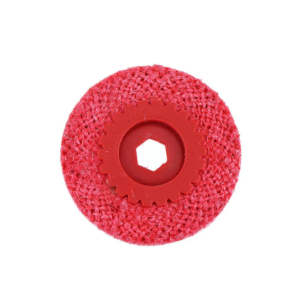
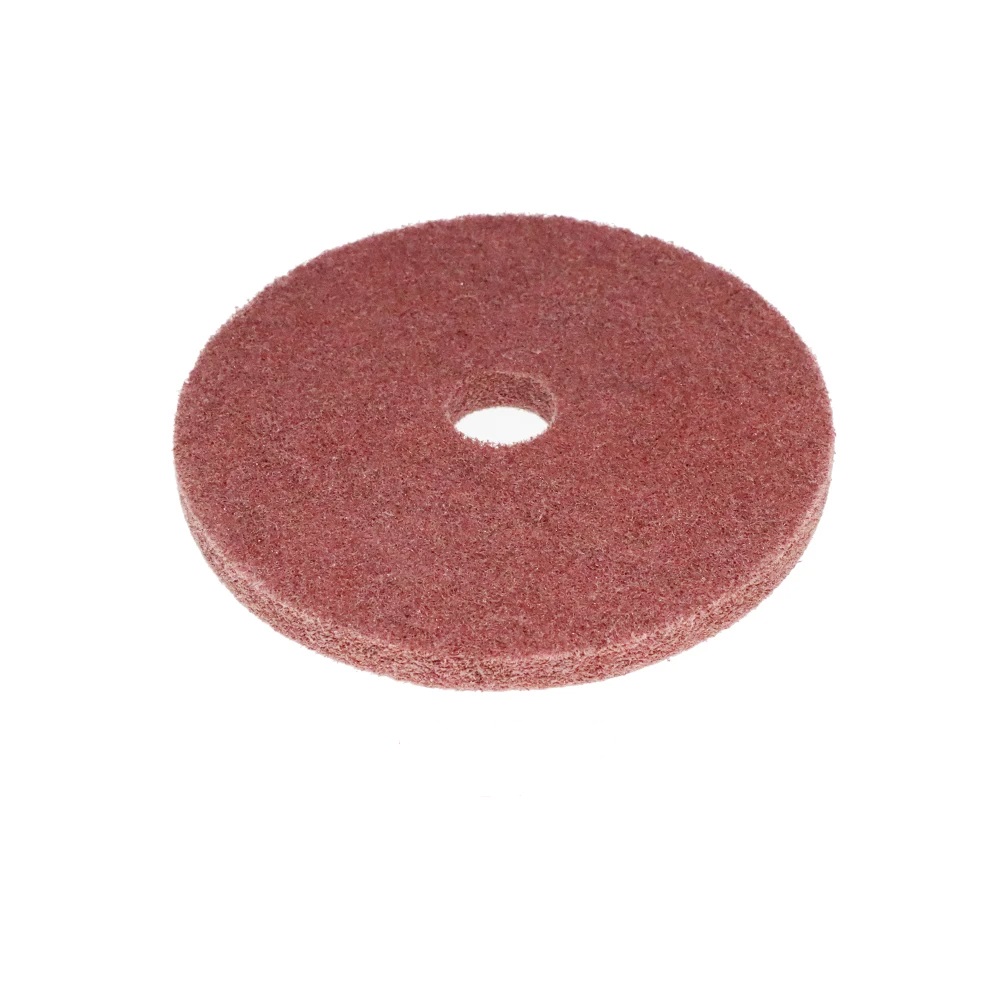
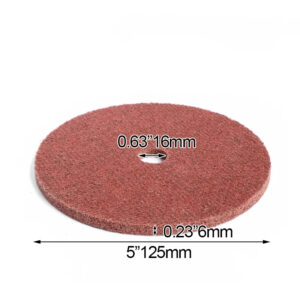
The red wheel shown here has a fibrous face and center bore. Non-woven abrasive selection depends on construction, mineral, grade and density; none of these can be reliably replaced by a color description. Include wheel thickness and the usable contact area in the specification as well. For a replacement program, retain the complete approved designation alongside a photograph, rather than reordering by red nylon wheel alone.
Plan different trials for edges and visible faces
For an edge-finishing trial, identify the burr location and the permissible edge condition, then inspect the feature after processing. For a blending trial, use a representative surface and compare the transition between worked and unworked areas under consistent lighting. For satin finishing, agree the direction and appearance of the grain before selecting the production wheel. Keep any critical dimensional checks in the acceptance criteria.
Application scenarios to evaluate
Use these scenarios to define a sample trial; suitability depends on the supplied specification and approved process.
| Buying situation | Selection focus | Trial objective |
|---|---|---|
| Deburring a machined edge | Residual burr, edge profile and allowed rounding | Inspect the burr and edge dimensions after the trial. |
| Blending a visible metal surface | Existing scratch pattern and transition into adjacent areas | Compare the worked and unworked areas under consistent lighting. |
| Matching a satin finish | Reference grain direction and surface appearance | Approve the finish reference before choosing a production grade. |
Specifications and selection details
| Construction | Non-woven nylon wheel; grade and construction specified per order |
|---|---|
| Product sizes | 4, 5, 6, 7 and 8 inches; custom sizes by inquiry |
| Shown color | Red |
| Required selection data | Abrasive mineral, grade, density, thickness, bore and rated speed |
When another wheel format makes more sense
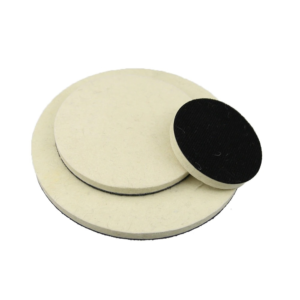
A non-woven finishing wheel is a different purchasing category from a felt wheel used with polishing compound. Start with the surface that remains after the preceding operation: a textured blend and a bright final polish call for different evaluations. For heavy stock removal or significant geometry changes, review the grinding stage first rather than expecting this finishing wheel to solve every surface defect.
Resolve inconsistent results before changing the grade
If the surface varies between parts, check the incoming finish, contact area, wheel condition and process consistency before concluding that a different grade is required. If the result changes after a wheel replacement, compare the full wheel specifications rather than the color. Keep reference samples from the approved trial so production and purchasing have the same standard.
Define an acceptance standard the production team can use
Use an actual part or representative coupon with a documented starting surface. Set the required appearance and any edge or dimensional limits before the trial. Record the exact wheel specification and approved machine setup. Inspect a sequence of comparable parts rather than one particularly successful example. Keep the accepted reference available to production and purchasing so a later change in finish can be traced to the process or the supplied item.
Frequently asked questions
Does red identify the grit?
No. Use the specified abrasive grade and density to identify the wheel. Keep those details on the quotation and sample label rather than treating red as a grit number.
Will it produce a mirror finish?
Surface conditioning and a mirror-polishing sequence have different finish requirements. Evaluate this wheel at the intended preparation or finishing stage, and include any subsequent polishing steps needed to achieve the accepted result.
What should a satin-finish sample demonstrate?
It should reproduce the agreed surface direction and appearance on the actual material, with acceptable edges and dimensions. Evaluate comparable parts under the same lighting and document the wheel specification and process used.
Is a non-woven wheel the same as a felt buffing wheel?
No. These are different finishing-product formats with different selection criteria. Non-woven abrasive selection involves the abrasive system and construction; a felt-wheel inquiry typically centers on the felt assembly and an appropriate polishing compound.
Can one grade cover both deburring and decorative finishing?
Only a trial against both requirements can establish that for your process. Define the acceptable burr removal, edge condition and surface appearance separately so one successful result does not conceal a failure in the other.
What is needed for a repeatable wholesale specification?
Record diameter, thickness, bore, abrasive designation, grade, density or construction code, applicable speed marking and approved sample reference. Identify every variant clearly rather than grouping different specifications under one red-wheel description.
Request a sample or a defined wholesale quotation
Send your required size and mounting details, workpiece material, finish target and machine model. If replacing an existing item, include its marking and front, reverse and side photographs. State the sample quantity, expected order quantity, packaging requirements and destination.
Ask for the proposed specification, included accessories, price, sample terms and lead time in the quotation. For a repeat purchasing program, keep the approved sample reference and the agreed inspection criteria with every order.
Send your requirements to Cornovo Abrasive