Product Details
Discuss your application or request a sample
A useful assortment has a reason for every size
A mixed-size range works best when each item has a defined place in the customer's process. Record the machine and backing-plate combination for each size, then describe the panel or part access it is intended to provide. Avoid presenting the entire range as universally interchangeable. Clear variant descriptions reduce uncertainty when customers return to buy the same pad.
Separate appearance from the construction that matters
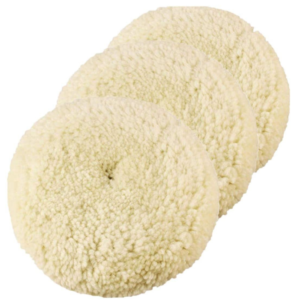
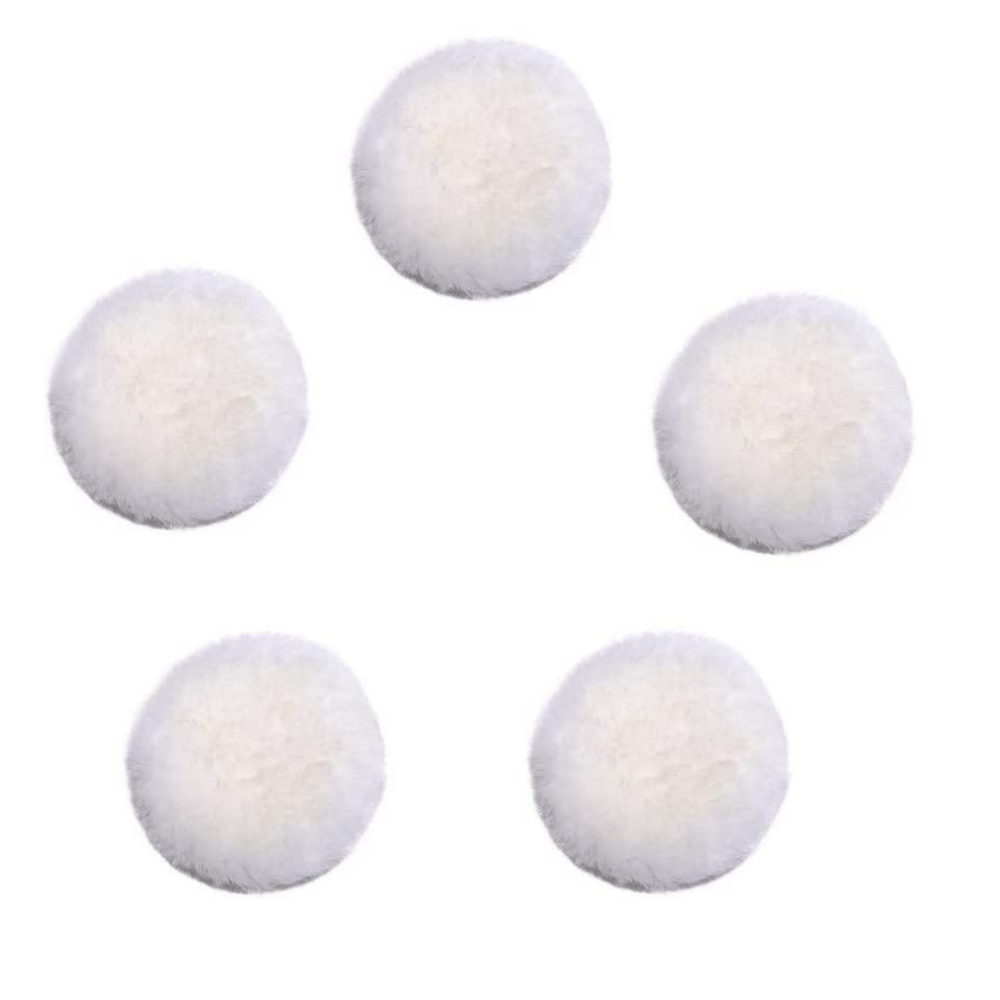
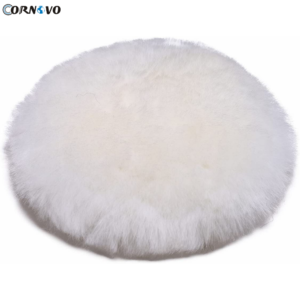
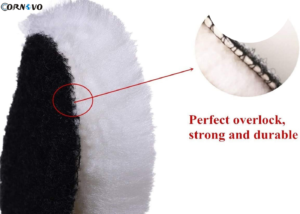
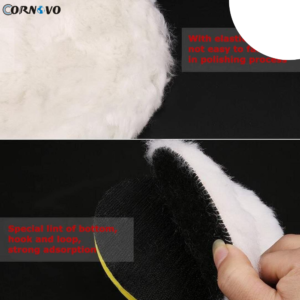
The white working face helps identify this range visually, but it does not by itself establish fiber origin, wool percentage or cutting grade. A useful product specification describes the fiber construction, pile, attachment and backing. Ask for front, edge and reverse views of the exact variant under evaluation, so your catalog represents the pad that will actually be supplied.
Select with the surface and compound in mind
For an automotive-polishing inquiry, provide the coating type and condition, the compound system and the intended finish. For another surface, describe its material and any coating separately. Evaluate a representative sample before expanding the application claim. A pad selected for one coating and machine combination is not automatically the right choice for every painted or polished surface.
Application scenarios to evaluate
Use these scenarios to define a sample trial; suitability depends on the supplied specification and approved process.
| Buying situation | Selection focus | Trial objective |
|---|---|---|
| A workshop polishing-pad assortment | Machine and plate combinations used by the team | Give every size a defined application and verified attachment. |
| Automotive panel-polishing evaluation | Coating, initial condition and compound sequence | Judge the complete finish, including any refinement stage. |
| A retail replacement-pad range | Customer machine types and required package contents | Check that each variant can be identified without relying on color alone. |
Specifications and selection details
| Nominal sizes | 3, 4, 5, 6 and 7 inches; custom sizes by inquiry |
|---|---|
| Shown appearance | White round pads with a soft-looking fiber face |
| Ordering details | Attachment system, pile length, pad thickness and backing-plate size |
| Material confirmation | Request fiber composition and construction details for the selected pad |
Choose a focused size page when replacing one pad
Use this range page to compare sizes and plan an assortment. If you already need a nominal 6-inch or 7-inch pad, the dedicated size pages make the next discussion more precise. Match the attachment and construction as well as the diameter. The photographed assortment is a product reference; specify the exact piece count and size mix in the order.
Make the sample useful for resale
For distributors, a sample is also a chance to check the information a customer receives. Review whether the pack identifies the nominal size, mounting requirements, quantity and item reference clearly. Agree which images and specifications describe each variant. A well-defined product identity is more useful for repeat purchasing than a broad claim that one pad does everything.
A practical sample check before a larger order
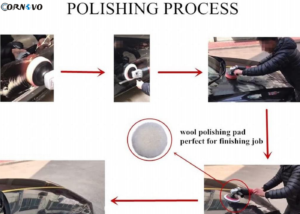
Start with a correctly identified pad and an approved machine-and-mounting assembly. Choose a representative test surface and use the intended compound system according to its instructions. Record the initial surface condition, the pad reference and the complete finishing sequence. Inspect the result after the process is complete, including any planned refinement stage. Keep a reference sample or photographs under consistent lighting so the workshop and purchasing team share the same acceptance standard.
Questions to investigate when the result changes
| Observation | What to review |
|---|---|
| Finish differs between trials | Compare the incoming surface, compound, pad condition and machine setup. Change one controlled variable at a time where practical, rather than changing the entire system and losing the basis for comparison. |
| Residue or fibers obscure the result | Follow the pad and compound suppliers' cleaning and inspection instructions before judging the surface. Do not introduce an unapproved solvent or cleaning method that could affect the pad assembly. |
| Unexpected vibration or poor seating | Stop and inspect the mounting, centering and condition of the complete assembly. Resolve any mismatch or damage before continuing; increased pressure is not a way to correct an unsuitable fit. |
Frequently asked questions
Are all pictured pads included in one pack?
The photograph illustrates multiple pads, but it does not establish pack quantity. Ask for the piece count and size breakdown on the quotation.
Does white wool mean a finishing grade?
Color alone does not establish polishing aggressiveness. Select the pad and compound as a system, using an approved test area or sample panel.
How should I choose a starter assortment?
Start with the polishers and backing plates your customers already use. Select a limited number of well-defined pad variants, test them with the intended compound systems and expand the range only when each additional size answers a real customer need.
Will a wool pad leave a swirl-free finish in one step?
Evaluate the complete pad-and-compound process on the intended surface. Some processes need a subsequent refinement step. Judge the finished result rather than relying on a universal one-step claim.
Can the same pad be used with different compounds?
A change of compound can introduce carryover from the previous process. Follow the suppliers' instructions and use a clear pad-identification system. Dedicated pads are useful when the finishing stages or materials need to remain separate.
What should I include in a sample request?
Give the pad size and attachment, machine model, workpiece or coating, compound system and target result. Add the quantity and destination, and identify whether you need a pad alone or a complete mounting assembly.
Request a sample or a defined wholesale quotation
Send your required size and mounting details, workpiece material, finish target and machine model. If replacing an existing item, include its marking and front, reverse and side photographs. State the sample quantity, expected order quantity, packaging requirements and destination.
Ask for the proposed specification, included accessories, price, sample terms and lead time in the quotation. For a repeat purchasing program, keep the approved sample reference and the agreed inspection criteria with every order.
Send your requirements to Cornovo Abrasive